Managing clothing and textile sensitivities means identifying the exact fabric features that trigger discomfort, then changing the environment and teaching dressing in small steps. Many autistic people have sensory differences, including adverse responses to textures, which is listed in DSM 5 autism criteria.
What Managing Clothing and Textile Sensitivities can look like
Managing clothing and textile sensitivities often starts with naming the trigger, not the outfit. Common triggers include tags, seams, elastic waistbands, sock toe seams, scratchy fabrics, and temperature changes. Research on clothing and autism describes strong reactions to labels and the feeling of certain textiles on skin.
A simple home checklist for Managing Clothing and Textile Sensitivities
Managing clothing and textile sensitivities is easier when you control the basics first:
- Remove tags and check inside seams for loose threads.
- Try socks inside out or use seamless socks.
- Layer a soft base layer under tougher uniforms.
- Pre wash new clothes to soften fabric.
- Keep one “safe outfit” option for urgent mornings.
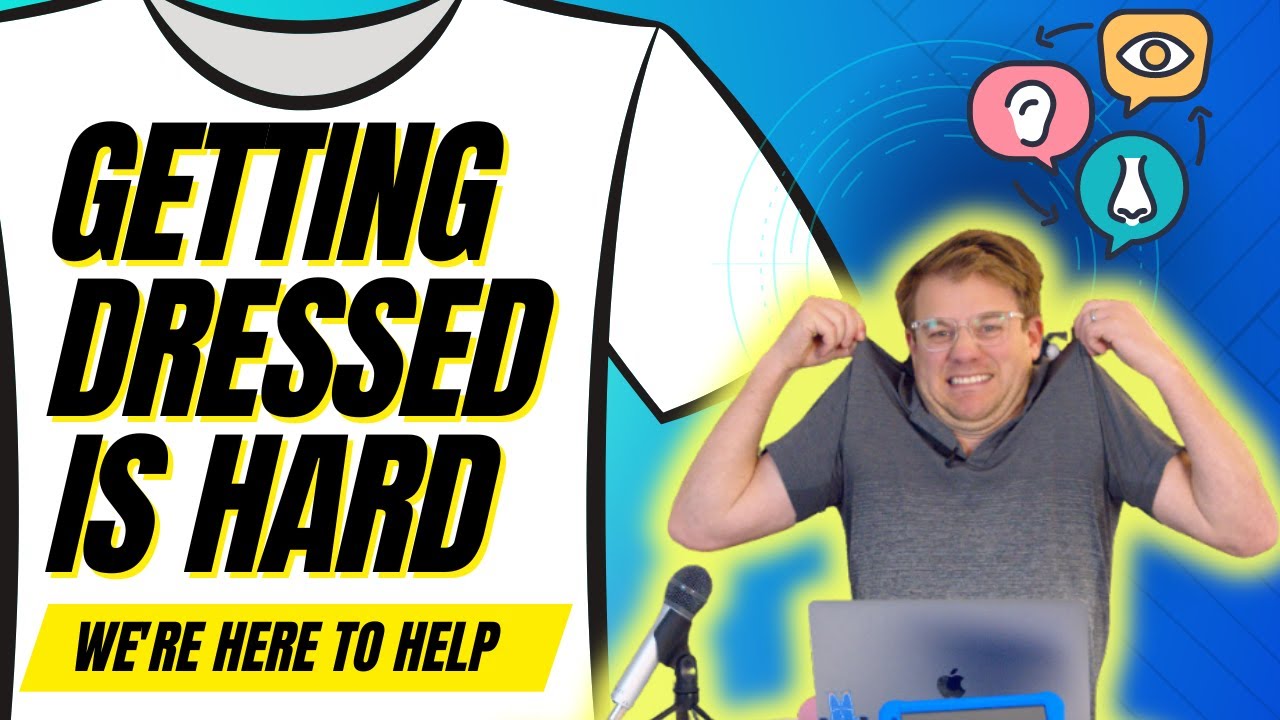
Teaching dressing skills the ABA way
Managing clothing and textile sensitivities is not only about buying different clothes. It is also about teaching tolerance and independence. In sessions, we use task analysis, short practice, and reinforcement for each small step, like “shirt on” then “shirt stays on for 30 seconds.” This matches clinical guidance that sensory symptoms are common in autism and can affect daily routines.
Managing clothing and textile sensitivities works best when triggers are specific and practice is gradual. If getting dressed is disrupting school mornings, call Move Up ABA in Maryland. We can build a dressing plan with visuals, step goals, and data tracking. Managing clothing and textile sensitivities is teachable.
FAQs
Is this common in autism?
Sensory hyper or hyporeactivity to textures is included in DSM 5 autism criteria.
What is the fastest change to try?
Remove tags, check seams, and try seamless socks or socks inside out.
Should I force uncomfortable clothes?
Guidance emphasizes practical adaptations and gradual practice, not sudden exposure.
Can therapy help?
Yes. ABA can teach dressing steps and tolerance through structured practice and reinforcement.
Sources
- https://www.autismspeaks.org/autism-diagnostic-criteria-dsm-5
- https://pmc.ncbi.nlm.nih.gov/articles/PMC10066095/
- https://pmc.ncbi.nlm.nih.gov/articles/PMC12531387/
- https://www.uhd.nhs.uk/uploads/about/docs/our_publications/patient_information_leaflets/Childrens_therapy/Practical_Tips_for_Clothing_Tactile_Sensitivity_and_Getting_Dressed.pdf
- https://publications.aap.org/toolkits/book/338/chapter/5732478/Sensory-Symptoms-of-Autism-Spectrum-Disorder