Play is not just entertainment. It is a foundation for learning, communication, and social development. In autism intervention, play is used as both a natural learning context and a structured teaching tool.
The role of play in autism: why free play, structured play and peer play matter is supported by developmental and behavioral research. Studies show that different types of play contribute to language development, social engagement, flexibility, and emotional regulation. Each type serves a distinct purpose.
This article explains The role of play in autism: why free play, structured play and peer play matter, using research-based findings and clinical applications in ABA therapy.
Understanding The Role of Play in Autism: Why Free Play, Structured Play and Peer Play Matter
Children typically develop play skills in predictable stages. These include:
-
Sensorimotor play
-
Functional play
-
Pretend play
-
Cooperative play
Research shows that autistic children may show differences in symbolic and social play development. Understanding The role of play in autism: why free play, structured play and peer play matter begins with recognizing these developmental patterns.
Free Play: A Natural Context for Learning
Free play allows a child to choose activities independently. There are minimal adult-imposed rules. In autism intervention, free play helps assess:
-
Spontaneous language
-
Preferred interests
-
Joint attention
-
Initiation skills
Research by Kasari et al. (2006) found that joint attention interventions embedded in natural play improved social communication outcomes.
This demonstrates The role of play in autism: why free play, structured play and peer play matter in promoting spontaneous communication.
Structured Play: Targeted Skill Instruction
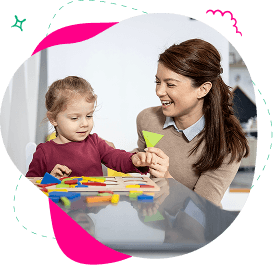
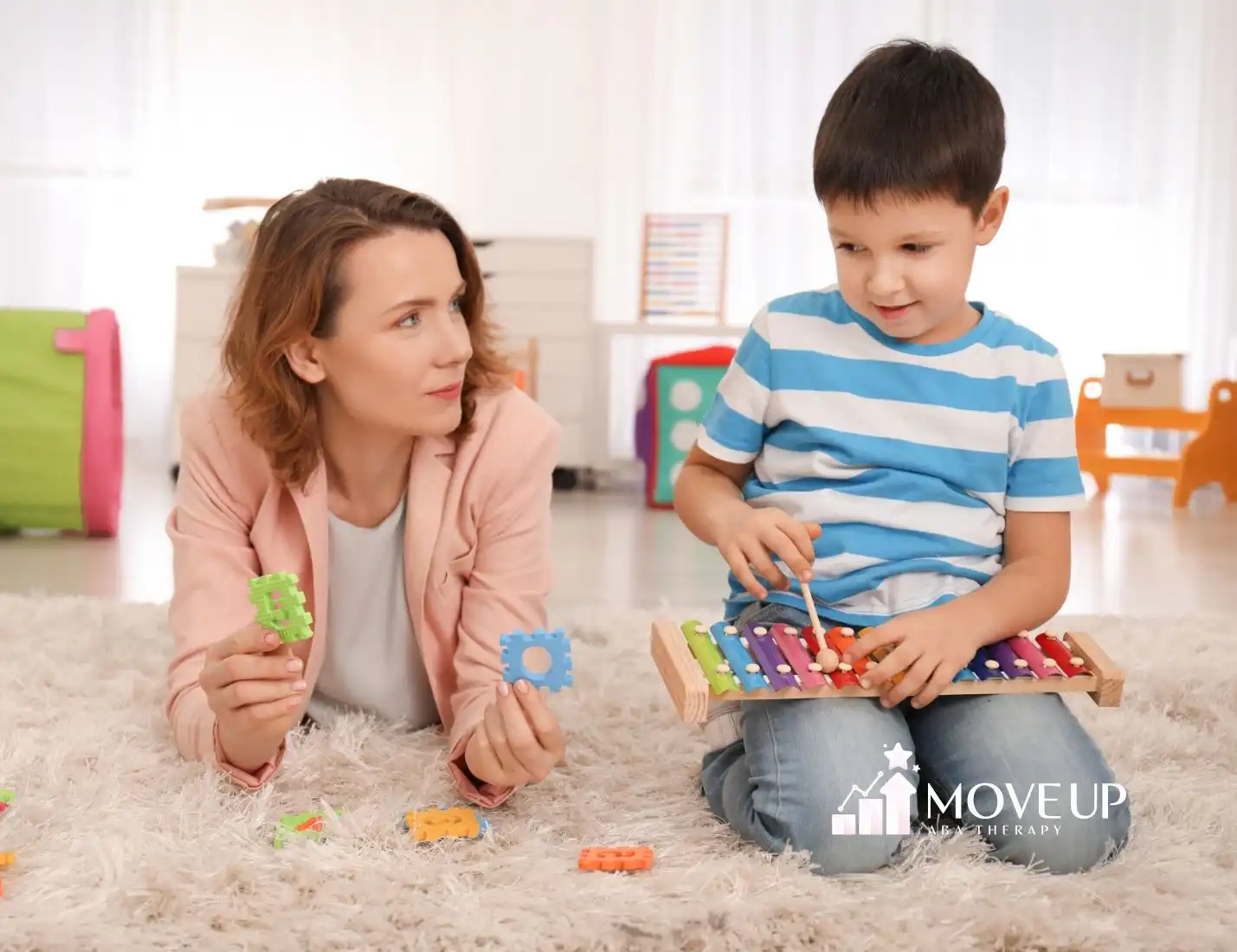
Structured play includes adult-guided activities with clear goals and prompts. In ABA therapy, structured play is used to teach:
-
Turn-taking
-
Imitation
-
Requesting
-
Emotional labeling
-
Problem-solving
Structured play incorporates reinforcement and data collection. Lovaas (1987) demonstrated that structured behavioral intervention improves adaptive functioning in children with autism.
Structured play supports measurable outcomes. This is central to The role of play in autism: why free play, structured play and peer play matter within ABA frameworks.
Peer Play: Social Generalization in Action
Peer play involves interaction with other children. It builds:
-
Social reciprocity
-
Shared attention
-
Cooperative problem-solving
-
Conflict resolution
Research shows peer-mediated interventions increase social engagement for autistic children. Peer play is essential for generalizing skills learned in structured therapy. This supports The role of play in autism: why free play, structured play and peer play matter beyond one-on-one sessions.
Case Example: Integrating All Three Types of Play
A child showed limited peer interaction and repetitive solitary play.
Intervention included:
-
Free play observation to identify interests
-
Structured play sessions targeting turn-taking
-
Peer play groups with trained facilitation
Over several months, spontaneous peer initiations increased and prompt levels decreased.
This combined model reflects The role of play in autism: why free play, structured play and peer play matter across intervention stages.
Play and Language Development
Research shows strong links between symbolic play and language development. Toth et al. (2006) found that early pretend play predicts later expressive language in children with autism.
Free play fosters creativity. Structured play builds vocabulary. Peer play strengthens conversational skills. Together, they illustrate The role of play in autism: why free play, structured play and peer play matter for communication growth.
Play and Emotional Regulation
Play allows safe practice of:
-
Waiting
-
Sharing
-
Managing frustration
-
Flexible thinking
Mazefsky et al. (2013) found emotional regulation challenges are common in autism. Structured and peer play create opportunities to practice regulation skills with support.
Data Collection in ABA Play-Based Interventions
ABA requires measurable outcomes. During play sessions, clinicians track:
-
Frequency of initiations
-
Duration of engagement
-
Prompt levels
-
Generalization across settings
Data ensures play is not random. It is targeted instruction. This data-driven approach reinforces The role of play in autism: why free play, structured play and peer play matter in clinical practice.
Play Across Developmental Stages
The role of play changes with age.
In early childhood, focus may be on imitation and joint attention.
In middle childhood, structured games support rule-following and cooperation.
In adolescence, peer-based activities promote social independence.
Each stage reflects The role of play in autism: why free play, structured play and peer play matter across development.
Limitations and Considerations
Play interventions must be individualized. Not all children respond equally to peer settings. Structured support may be required before generalization. Play-based interventions should align with developmental level and sensory preferences.
Conclusion: Play as a Core Component of ABA
Play is not separate from therapy. It is a context for learning measurable skills. Research consistently supports The role of play in autism: why free play, structured play and peer play matter for language, social interaction, and emotional growth.
Free play encourages spontaneity. Structured play builds specific skills. Peer play promotes generalization and independence.
At Move Up ABA, our clinicians integrate play-based strategies within structured, data-driven treatment plans. If your child needs support developing social communication or peer engagement skills, schedule an assessment with Move Up ABA to explore how individualized play-based ABA services can support long-term progress.
Contact Move Up ABA today to begin a comprehensive evaluation and build a play-centered intervention plan tailored to your child’s needs.
FAQs
Why is play important in autism therapy?
Play supports language, social skills, and emotional regulation development.
What is structured play in ABA?
Structured play involves guided activities with specific teaching goals and reinforcement.
How does peer play help autistic children?
Peer play increases social engagement and promotes generalization of learned skills.
Is free play useful in therapy?
Yes. Free play allows observation of spontaneous communication and interests.
Can play be measured in ABA sessions?
Yes. Clinicians collect data on engagement, initiation, and skill acquisition during play.
Sources
- https://pmc.ncbi.nlm.nih.gov/articles/PMC9850869/
- https://journals.sagepub.com/doi/10.1177/13623613251315985
- https://www.mdpi.com/1660-4601/18/11/5787
- https://www.researchgate.net/publication/396474767_A_Play_Therapy_Approach_for_Addressing_Social_Communication_and_Behavioral_Challenges_in_Children_with_Autism