Pool days should feel like freedom, not a fight. For many families raising an autistic child, splashing water, echoing shouts, and unpredictable routines can turn a simple summer outing into a source of stress before anyone even gets wet. At Move Up ABA, our team works with families across Maryland and Virginia to turn moments like these into wins, one small step at a time.
Autism pool safety tips are strategies that combine water safety, sensory support, and behavior-based planning to help autistic children enjoy the pool while staying safe. They cover what to do before you leave the house, how to support your child at the water’s edge, and how to help them settle once you’re home. The short version: prepare early, communicate clearly, offer choices, and never let supervision lapse.
Why Autism Pool Safety Tips Matter This Summer
Water safety carries extra weight for autism families. The American Academy of Pediatrics recommends layered water safety protection for every family, including close supervision, water competency skills, and physical barriers around pools. That guidance carries added urgency for autistic kids: research from Columbia University found that injury-related deaths, drowning included, account for a disproportionate share of mortality among autistic children compared with the general pediatric population.
Wandering, delayed danger recognition, and a strong sensory pull toward water all play a role in that elevated risk. Add in summer routine disruptions that already unsettle a lot of autistic kids, and pool days need more than a good attitude. That’s exactly why autism pool safety tips go beyond simply watching a child closely — they build a full plan around entry, communication at the water’s edge, and recovery once you’re home.
Common Pool Challenges and Sensory-Friendly Swimming Tips
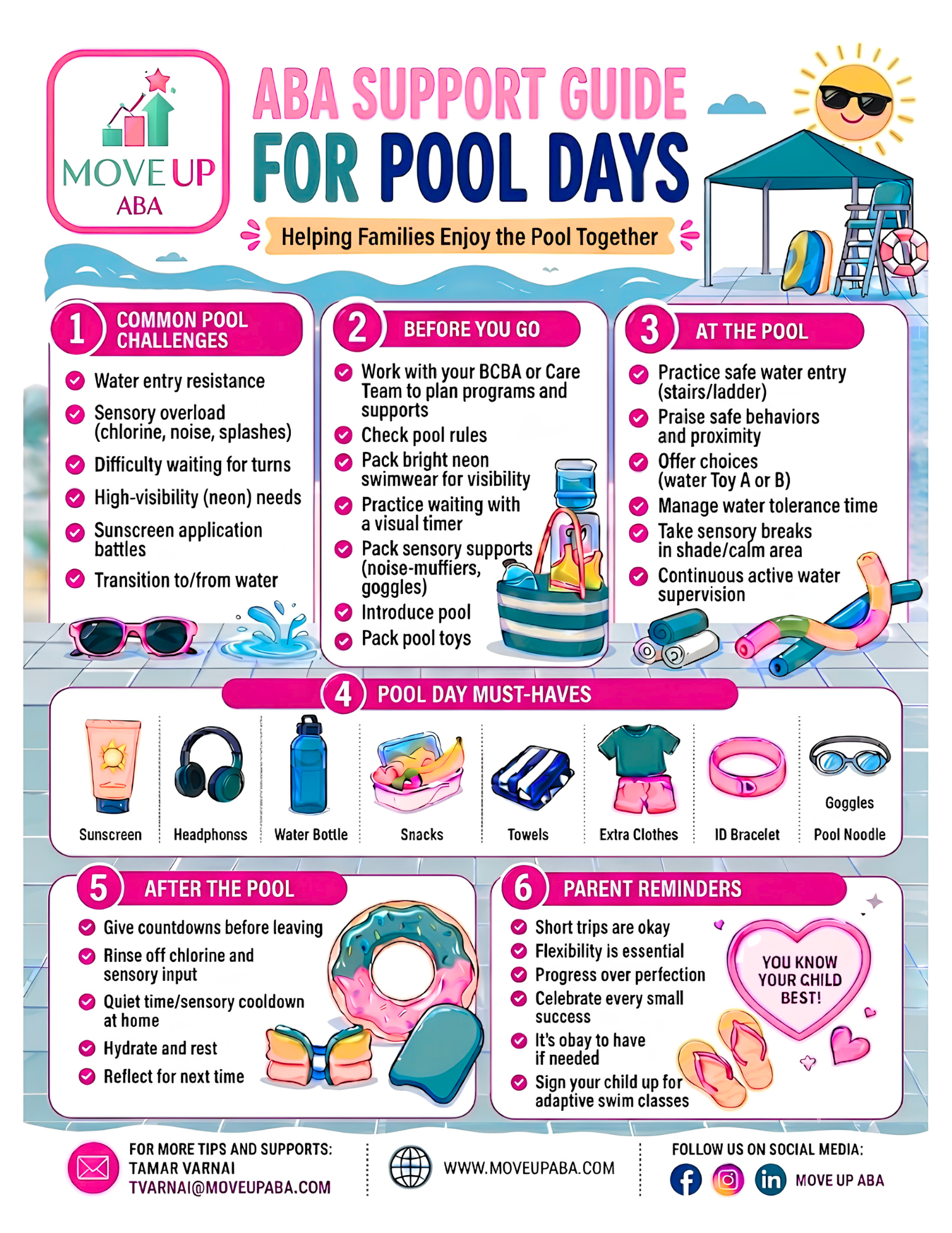
Before diving into strategies, it helps to know what typically gets in the way of a smooth pool day. Families most often run into:
- Water entry resistance, especially with cold or unfamiliar pools
- Sensory overload from chlorine smell, echoing noise, and unexpected splashes
- Difficulty waiting for a turn on stairs, slides, or shared toys
- A need for high-visibility swimwear so a child stands out in the water
- Sunscreen application battles tied to texture or smell
- Hard transitions into and out of the water
A parent-focused study in the Journal of Autism and Developmental Disorders found that pool noise, lighting, and chlorine odor are consistently named as major sources of overload for autistic children. Once you know which sense is driving the resistance, sensory-friendly swimming tips get much easier to apply. Noise-sensitive kids often do better with swim-safe ear plugs. Smell-sensitive kids may need a scent-neutral sunscreen. The same sensory-friendly strategies that help in stores or restaurants apply just as well poolside.
Before You Go: ABA-Informed Pool Prep
A little planning goes a long way — nearly half of autistic children wander or bolt from safe spaces at some point, often toward water. Ahead of any pool trip:
- Loop in your BCBA or care team to plan supports specific to your child
- Check the pool’s posted rules so there are no surprises on arrival
- Pack bright, neon swimwear so your child is easy to spot in the water
- Practice waiting with a visual timer before you ever leave the house
- Pack sensory supports like noise-muffling ear plugs and goggles
- Introduce the pool gradually, through photos, videos, or a short visit first
- Bring along a few preferred pool toys to ease the transition in
Many of the same transition strategies that help with everyday changes, like visual countdowns and advance warnings, apply directly to pool days. Move Up ABA’s individualized ABA programs can help your family build a plan around your child’s specific triggers and strengths, whether that support happens at home, at school, or out in the community.
At the Pool: Safe Swimming and Autism Drowning Prevention
Once you’re there, a few consistent practices make a real difference:
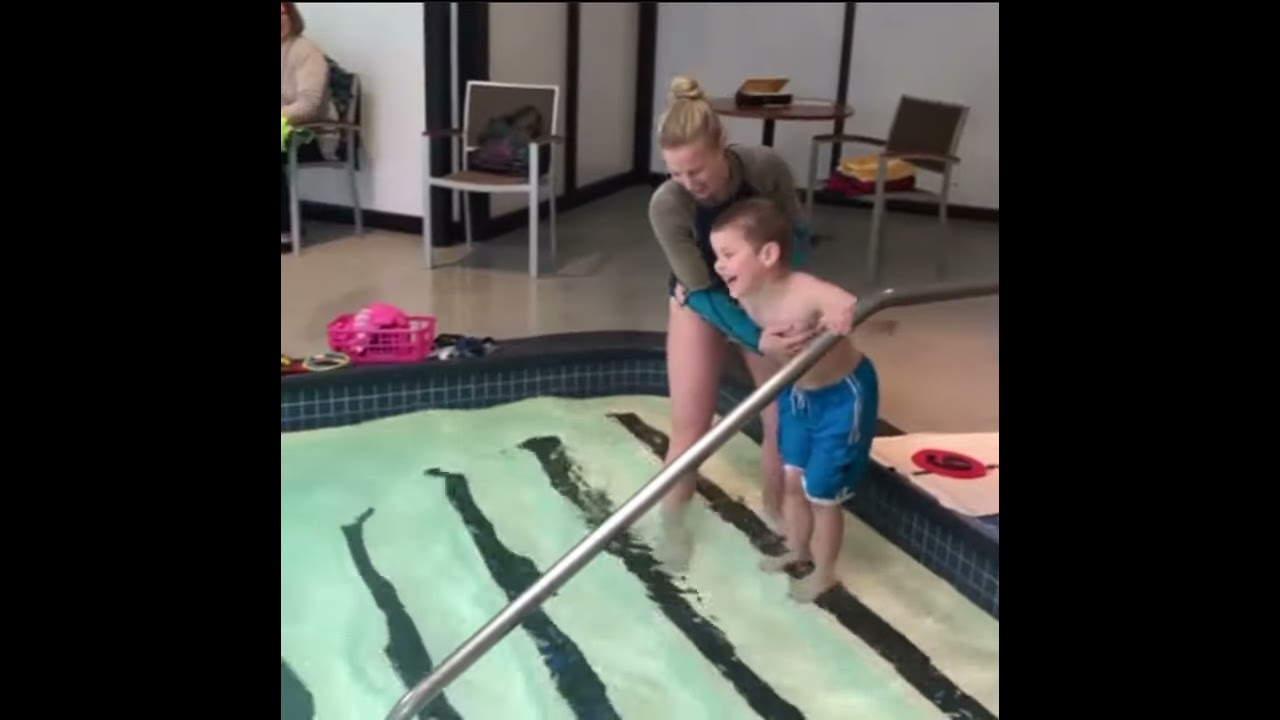
- Practice safe water entry using stairs or a ladder, never jumping in
- Praise safe behaviors and safe proximity to the water right away
- Offer real choices, like “the blue noodle or the red one”
- Manage total water tolerance time before fatigue or overload sets in
- Take sensory breaks in shade or a calm area between swim stretches
- Keep continuous, active supervision, with eyes on your child at all times
Autism drowning prevention isn’t one single step. It’s layers stacked together: swim skills, physical barriers, and above all, an adult whose full attention stays on the water. The CDC lists supervision gaps among the top risk factors for drowning in children of any age, and that risk climbs when a child is prone to wandering toward water unnoticed.
One Move Up ABA family put this into practice by pairing a visual “wait” card with a short water break every twenty minutes at the pool. Their child, previously resistant to leaving the water at all, began accepting breaks with far less protest after only a few visits, and the family reported calmer pool days overall.
Pool Day Must-Haves and After-Pool Recovery
Pack these essentials before you head out: sunscreen, noise-reducing headphones, a water bottle, easy snacks, extra towels, a full change of clothes, an ID bracelet, swim goggles, and a favorite pool noodle.
Getting out of the pool can be just as hard as getting in. Support the exit by giving countdowns before it’s time to leave, rinsing off chlorine and other sensory input right away, building in quiet time or a sensory cooldown once you’re home, prioritizing hydration and rest, and reflecting briefly on what worked so next time is easier. A predictable after-pool sequence, repeated every time, builds security fast.
Want this checklist on hand at the pool? Save or print our Pool Day Tips sheet 📄 and keep it in your pool bag all summer. You’ll find more printable guides like it in our resource library 🔗.
Parent Reminders and Swim Lessons for Autism
A few things worth repeating to yourself as often as your child needs to hear them: short pool trips still count, flexibility matters more than a perfect outing, progress beats perfection, every small success deserves celebration, and it’s okay to have a hard day at the pool.
Swim lessons for autism work best with an instructor trained to teach neurodivergent swimmers. Researchers studying drowning incidents recommend swimming lessons and water safety training beginning right after diagnosis, not years later. Many communities now offer adaptive or one-on-one options built around sensory needs. For families across Maryland and Virginia, local parks and recreation departments increasingly list these programs by name, so it’s worth a quick call to ask what’s available near you.
Pool days don’t have to be a gamble. With the right prep, clear communication at the water’s edge, and a plan for what happens after you towel off, summer swimming can become something your whole family looks forward to.
Drop our team a line, and let’s build sensory-friendly pool strategies that fit your child’s specific needs this summer. Contact us to get started.
FAQs
What are the best autism pool safety tips for summer?
Focus on sensory prep beforehand, safe water entry practices, offered choices at the pool, and a calming routine once you’re home. Continuous, active supervision matters most of all.
Are autistic children more likely to drown than other kids?
Yes. Research shows drowning risk is significantly higher among autistic children than in the general pediatric population, largely tied to wandering and delayed danger recognition.
What sensory tools help autistic kids at the pool?
Swim-safe ear plugs, scent-neutral sunscreen, high-visibility swimwear, and a familiar pool toy are common sensory-friendly swimming tips that ease pool anxiety.
Should autistic children take swim lessons?
Yes. The American Academy of Pediatrics recommends swim lessons as one layer of drowning prevention, and adaptive or one-on-one lessons work especially well for autistic swimmers.
How do I help my child transition out of the pool without a meltdown?
Give a countdown before leaving, rinse off right away, and build in quiet time at home. A consistent after-pool routine reduces resistance over time.
Sources:
- https://publications.aap.org/pediatrics/article/158/1/e2026077410/207630/Prevention-of-Drowning-Policy-Statement
- https://www.publichealth.columbia.edu/news/individuals-autism-substantially-heightened-risk-injury-death
- https://link.springer.com/article/10.1007/s10803-025-06819-7
- https://www.kennedykrieger.org/stories/nearly-half-children-autism-wander-or-bolt-safe-places
- https://www.cdc.gov/drowning/risk-factors/index.html
- https://www.cdc.gov/child-development/disability-safety/wandering.html
- https://pmc.ncbi.nlm.nih.gov/articles/PMC5721095/