
“T-Rex arms” describes a posture — elbows bent, hands held close to the chest, forearms tucked in like a Tyrannosaurus rex — that functions as a common self-regulation or comfort behavior. It shows up in autistic people, people with ADHD, and plenty of neurotypical children and adults, especially when they’re excited, anxious, cold, or sensory-overloaded. On its own, T-Rex arms is not a diagnostic sign of autism, ADHD, or anything else — it’s a posture many different nervous systems reach for, worth noticing rather than treating as proof of a specific condition.
Imagine a child walking into a noisy, busy classroom and instinctively holding their arms bent close to their body. Families, teachers, and therapists in Maryland and Virginia often notice this posture and wonder what it means and how to respond. Is it a habit? A sensory need? A form of communication? In this guide, we look at why T-Rex arms shows up in both autism and ADHD, what it communicates, how it can affect sleep, and supportive ways to respond — without trying to change who someone is.
Defining T-Rex Arms
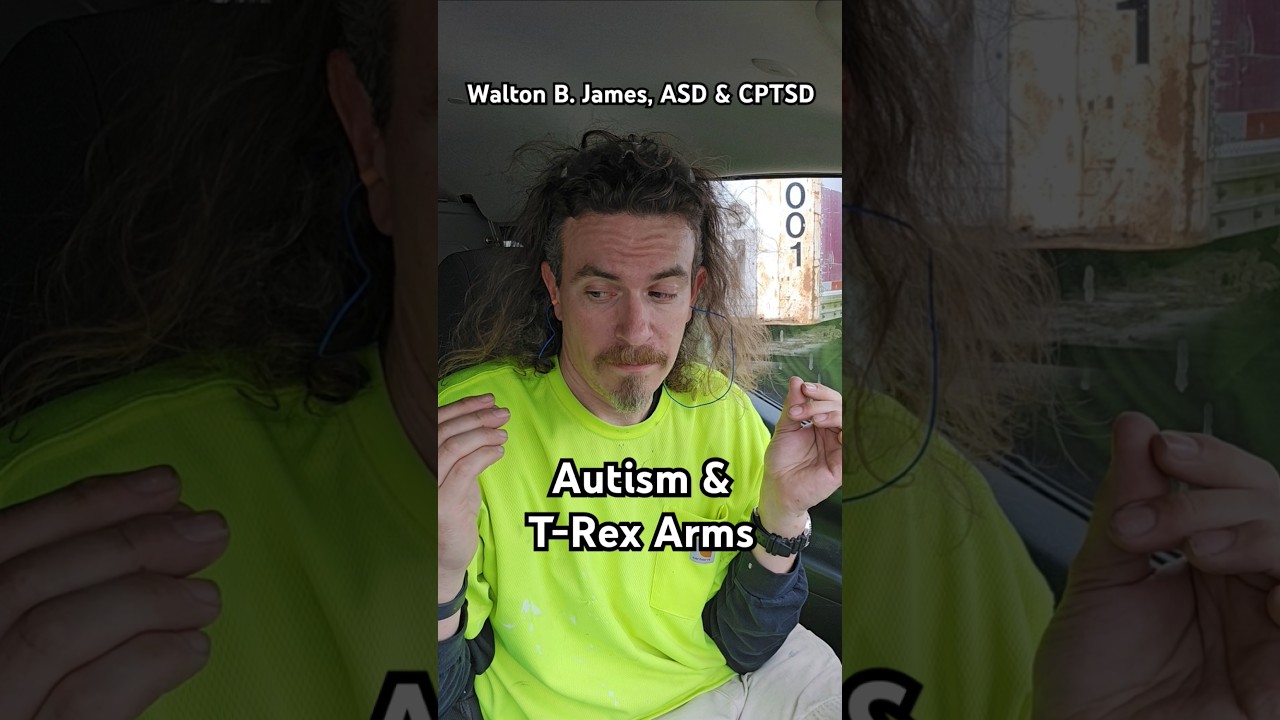
Autistic T-Rex arms describes a behavior in which someone holds their arms close to the torso, elbows bent at roughly a 90-degree angle, hands cupping small objects or held in loose fists against the chest. Many autistic children and adults adopt this stance during moments of sensory overload, routine transitions, or social interaction. Professionals often classify the posture as a form of stimming, or self-stimulating behavior. Stimming helps regulate sensory input and emotional state — and, as the sections below cover, it isn’t unique to autism.
T-Rex Arms: ADHD or Autism?
The query “is it ADHD or autism” comes up constantly around T-Rex arms, and the honest answer is that the posture itself doesn’t distinguish between the two — or rule either one out.
Why T-Rex Arms Show Up in ADHD
Motor coordination and balance differences are a documented feature of ADHD, not just the inattention or hyperactivity most people associate with the diagnosis. Research comparing postural control found greater postural sway in ADHD compared to neurotypical peers, a pattern also reported in children with ADHD. Holding the arms bent and pulled in close to the torso reduces how much the body has to actively stabilize through the shoulders and core — similar to how bracing an elbow on a desk steadies handwriting. Variable grip force and movement rhythmicity, both associated with ADHD, may also make a fixed, close-in arm position more comfortable than holding the arms loosely extended.
Why T-Rex Arms Show Up in Autism
Many autistic people process proprioception — the sense of where your own limbs are in space — differently than neurotypical peers. A study of children with autism spectrum disorder found measurable proprioceptive processing differences compared to both typically developing children and children with other developmental disabilities.
Holding the arms close to the body provides consistent, predictable input about limb position and can filter out some of the sensory noise of a busy room, which is why occupational therapists and behavior analysts often describe T-Rex arms as a form of stimming: a self-generated sensory input that helps regulate an unpredictable environment.
Can You Have T-Rex Arms and Not Be Autistic or ADHD?
Yes. Plenty of neurotypical children and adults adopt the exact same posture when they’re overjoyed, nervous, cold, or self-conscious — think of someone hunching their arms in at a surprise party or right before walking on stage. Because it’s a low-cost, widely available way for almost any nervous system to self-stabilize, seeing T-Rex arms once, or even often, isn’t evidence of autism or ADHD by itself.
What matters clinically is the broader pattern — how consistently it shows up, what else is going on developmentally, and whether there are other reasons to pursue an evaluation. If you’re trying to sort out whether a cluster of traits points toward one diagnosis, the other, both, or neither, our guide to ADHD vs. autism walks through the broader distinctions in more depth than a single posture ever could.
Interpreting Communication Cues
For many autistic individuals, this posture conveys comfort, anxiety, or readiness for social interaction without words. Variations in elbow angle and hand placement may signal different emotional states or needs. Educators and caregivers who observe these cues can respond more empathetically and adjust support strategies. Recognizing T-Rex arms as a communication tool fosters understanding and builds trust, rather than treating it as something to redirect away from.
Recognizing Physical Discomfort
Constant wrist flexion or arm compression can irritate nerves and blood vessels in the wrist over time, potentially leading to pain, numbness, or tingling along the arm. Maintaining elbows bent near the torso for extended periods can also fatigue the muscles around the shoulder and forearm; occupational therapists generally recommend varying arm positions throughout the day to prevent joint stiffness and muscle fatigue rather than holding any single posture — including this one — for hours at a stretch.

T-Rex Arms While Sleeping
Sleeping with the wrists bent — the same flexed position that defines T-Rex arms during the day — is also one of the more common triggers for classic wrist-nerve symptoms. carpal tunnel symptoms worsen overnight precisely because so many people sleep with their wrists bent, a position that compresses the median nerve running through the wrist. Sustained overnight flexion can leave the hand or forearm feeling numb, tingly, or stiff for several minutes after waking.
This isn’t unique to autistic or ADHD sleepers — anyone who sleeps with bent wrists can develop the same symptoms. But because T-Rex arms is already a preferred daytime comfort posture for many autistic and ADHD people, it’s also a posture some default to overnight, which is why “T-Rex hands” or “T-Rex arms while sleeping” is such a common follow-up question to the daytime version.
If waking up with numb hands or stiff wrists is a recurring pattern, a few adjustments tend to help:
- A body pillow that supports the arms in a more open, neutral position instead of pulled tight against the chest.
- A soft wrist splint designed for sleep, which keeps the wrist in a neutral position without restricting overall movement.
- Gentle wrist-extensor stretches before bed to ease tension built up from daytime flexion.
Sleep position is also tangled up with broader sensory preferences — pressure, containment, and predictability all factor in, not just wrist angle. For a fuller look at how those pieces fit together at bedtime, see our guide to autistic sleeping positions.
Applying Therapeutic Strategies
What supports can help individuals find relief or variation, without treating the posture itself as a problem to eliminate? Gentle stretches before and after sleep promote circulation and flexibility in the wrist and forearm muscles. Sensory supports, such as a body pillow, help maintain a more neutral arm posture at night. Play-based exercises encourage varied arm movements and build motor planning skills.
| Strategy | Purpose | Example |
| Gentle Stretching | Improve circulation and flexibility | Wrist extensor stretches before sleep |
| Body Pillow Support | Reduce wrist compression during sleep | Place a full-body pillow under the arms |
| Calming Practice | Ease the nervous system and support sleep | Guided breathing exercises before bedtime |
| Play-Based Exercises | Encourage varied arm movements and planning | Tossing a ball or stacking blocks |
Occupational therapists can demonstrate specific stretches and sensory supports tailored to each person’s needs. Behavior analysts may integrate play-based activities into daily routines to promote arm extension and strength — this is exactly the kind of individualized planning our ABA therapy at home programs build around each child’s actual sensory and motor profile, rather than a one-size-fits-all script.
Supporting Families And Educators
Observing T-Rex arm cues helps adults respond by adjusting sensory input and offering alternatives, rather than correcting the posture itself. Families and educators can integrate these steps:
- Validate the individual’s need for self-regulation by accepting T-Rex arms as meaningful communication.
- Offer sensory-friendly tools, such as weighted vests, noise-cancelling headphones, or fidget items.
- Encourage diverse motor activities, like yoga, reaching tasks, or guided arm exercises.
- Collaborate with occupational therapists and behavior analysts to develop personalized support plans.
Conclusion
T-Rex arms is not just a physical posture — it’s a meaningful response to sensory input, motor differences, and emotional regulation, and it shows up across autism, ADHD, and plenty of neurotypical experience. When families and professionals take the time to understand what this behavior represents, they can respond with empathy instead of correction.
For families seeking expert guidance, Move Up ABA provides individualized, evidence-based Applied Behavior Analysis (ABA) therapy designed to support each child’s unique strengths and challenges through our ABA therapy services. Our approach respects natural self-regulation strategies while helping children develop communication, motor, and daily living skills that promote independence.
We proudly serve families across Maryland and Virginia through flexible, family-centered services, including ABA therapy at home and school-based ABA. At Move Up ABA, we believe every behavior tells a story. If you’re ready to explore personalized ABA support for your child, contact us and take the next step forward together.
Frequently Asked Questions
Q: What are “T-Rex arms”?
A: “T-Rex arms” is a casual term for a posture where someone keeps their elbows bent and hands held close to the chest instead of extending their arms outward. It’s commonly linked to sensory processing differences, motor coordination differences, or anxiety, and shows up in autistic people, people with ADHD, and many neurotypical people as well.
Q: Are T-Rex arms a sign of ADHD?
A: Not on their own. T-Rex arms can relate to the postural control and motor coordination differences documented in ADHD, but the posture by itself isn’t a diagnostic marker — plenty of people without ADHD do it too, particularly when excited, cold, or anxious.
Q: Are T-Rex arms a sign of autism?
A: Not by themselves. The posture is commonly seen in autistic people and is often described as a form of stimming tied to proprioceptive processing differences, but T-Rex arms alone doesn’t indicate autism — it’s one posture among many that can serve a self-regulation function, autistic or not.
Q: Why do I hold my arms like a T-Rex when I’m anxious or excited?
A: Bringing your arms in close and bending the elbows reduces how much your body has to actively balance and stabilize, and it can create a contained, grounding sensation during moments of strong emotion — good or stressful. This applies whether or not someone is autistic or has ADHD; it’s a broadly available way nervous systems self-soothe under heightened arousal.
Q: Should I try to stop my child from doing T-Rex arms?
A: Generally, no. If it isn’t causing pain, injury, or interfering with a specific task, T-Rex arms is best treated as a form of communication and self-regulation rather than something to correct. If you notice signs of physical discomfort — numbness, tingling, or stiffness, especially after sleep — that’s worth addressing with an occupational therapist, but the goal is comfort and support, not eliminating the posture itself.
Q: How can ABA therapy help with T-Rex arms?
A: ABA therapy doesn’t aim to eliminate T-Rex arms as a posture. Instead, it can address underlying contributors — sensory sensitivities, anxiety, or motor planning differences — and build a child’s range of comfortable movement options through play-based, individualized strategies, while still respecting T-Rex arms itself as a valid form of self-regulation.
Q: What should parents do if they notice their child exhibiting T-Rex arms?
A: Start by observing when it happens and what seems to trigger it — a loud room, a transition, excitement, fatigue. If it’s frequent, paired with other developmental differences, or causing physical discomfort, a conversation with a pediatrician, occupational therapist, or behavior analyst can help clarify what’s going on and whether further evaluation makes sense.
Sources
- Cleveland Clinic — Carpal Tunnel Syndrome — https://my.clevelandclinic.org/health/diseases/4005-carpal-tunnel-syndrome
- Mayo Clinic Press — Carpal Tunnel Syndrome: Symptoms, Risks and How to Treat It — https://mcpress.mayoclinic.org/living-well/carpal-tunnel-syndrome-symptoms-risks-and-how-to-treat-it/
- Fitzpatrick et al., Developmental Cognitive Neuroscience — Postural Sway and Regional Cerebellar Volume in Adults with ADHD — https://www.sciencedirect.com/science/article/pii/S2213158215000972
- Blanche et al., American Journal of Occupational Therapy — Proprioceptive Processing Difficulties Among Children with ASD and Developmental Disabilities — https://research.aota.org/ajot/article/66/5/621/5711/Proprioceptive-Processing-Difficulties-Among