The lights drop. The speakers rumble. Trailers blast at full volume before the film even starts. For a lot of autistic kids, that opening stretch is less movie magic and more sensory ambush.
It does not have to be. Sensory friendly movies are regular screenings adjusted for comfort: the lights stay dimmed instead of pitch black, the sound runs lower, previews are often skipped, and kids can move, hum, or step out without anyone staring. With a little planning, a theater trip can shift from a source of dread to a genuine family win. The same regulation skills our team builds in ABA therapy carry straight over to outings like this one.
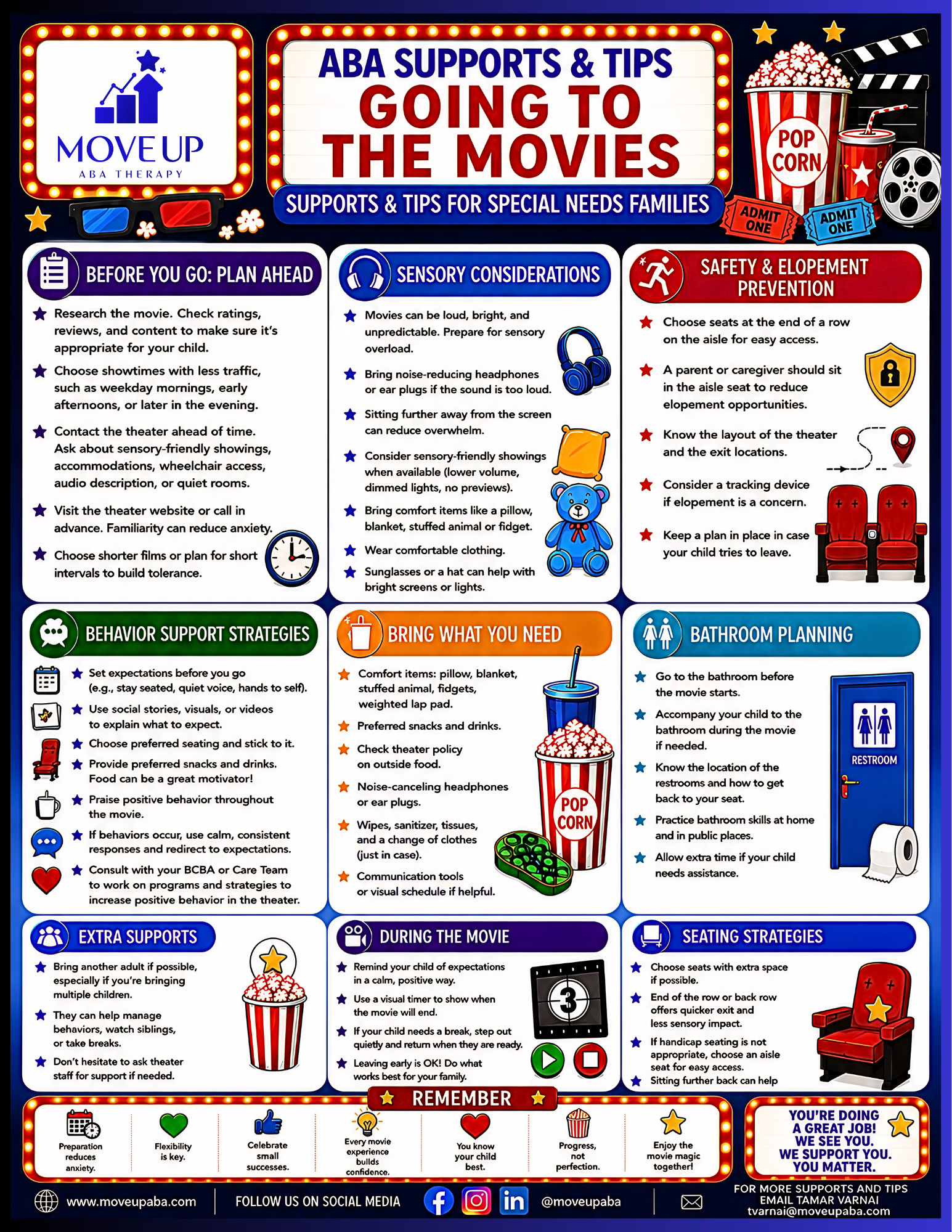
Here is the short version. Research the film, book an off-peak or sensory friendly showing, pack a comfort kit, plan your seats around a fast exit, and set clear expectations before you reach the popcorn line. Shared cultural participation is exactly what these screenings are designed to protect.
What Sensory Friendly Movies Are (and Why They Help)
Sensory differences are not a side note in autism. They sit inside the diagnostic criteria, which describe hyper- or hyporeactivity to sensory input as a core feature. Atypical responses to sound, light, and touch are commonly reported among autistic children, which is why the wrong environment can tip a fun plan into a hard afternoon fast.
A standard theater packs almost every trigger into one dark room: booming audio, a wall-sized screen, flashing light, crowds, and strong smells. Sensory friendly films flip those settings. They run with the lights partly up and the sound turned down, and many major chains schedule them monthly. Even when a dedicated showing is not on the calendar, an early weekday screening gives you a near-empty room with most of the same benefits.
Before You Go: Plan and Prep
Preparation does most of the heavy lifting. The same instincts that help you plan a new outing apply to a two-hour movie.
- Vet the film first. Check the rating, content, and runtime. Shorter movies build tolerance, and a film your child already knows from home lowers the surprise factor.
- Pick a quiet showtime. Weekday mornings, early afternoons, and late evenings mean thinner crowds and far less waiting.
- Call ahead to find a sensory friendly movie theater near you. Ask about sensory showings, quiet rooms, wheelchair access, and outside-food policies.
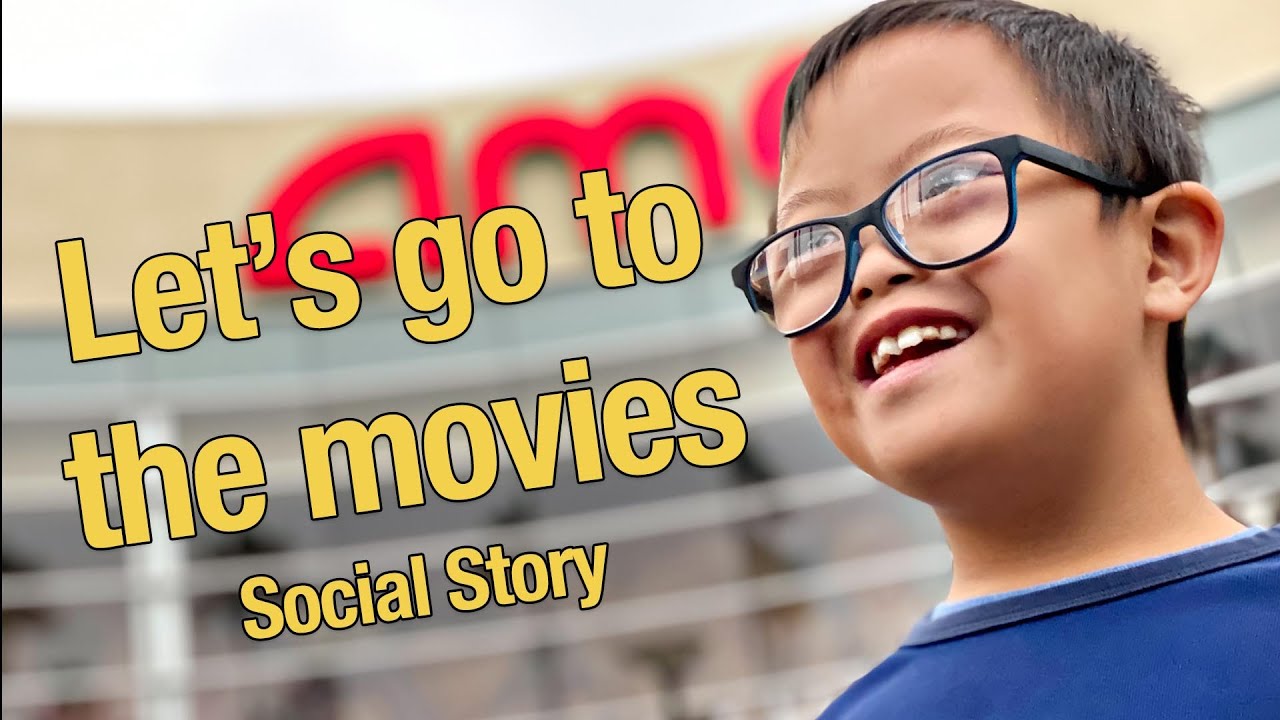
- Preview the space. Familiarity lowers anxiety. Walk through photos of the lobby and seats, or visit once with no film on. Social stories that spell out each step prime kids for the real thing, and they count as an evidence-based practice for autistic learners.
Pack Your Sensory Kit
Bring the tools that keep your child regulated. Because atypical sensory processing makes loud, bright rooms harder to filter, sitting farther back from the screen and packing the right gear can head off sensory overload before it builds.
- Noise-reducing headphones or ear plugs
- Sunglasses or a hat for bright screens
- A comfort item: pillow, blanket, fidget, or stuffed animal
- Preferred snacks and drinks (confirm the outside-food rule first)
- Wipes and a change of clothes, just in case
- A communication device or visual schedule if your child uses one
Want it all on one page? Download our movie theater supports sheet to keep in your bag, and browse the full resource library for more printable guides.
Stay Safe: Seating and Elopement
Every autism movie theater plan should account for wandering. Elopement, when a child leaves a safe space suddenly, is common and serious. Elopement research from the Kennedy Krieger Institute, published in Pediatrics, found that about half of autistic children aged 4 to 17 had left a safe environment at least once. The CDC treats wandering as a real safety concern for that reason, and a dark room full of exits raises the stakes.
- Choose an aisle seat at the end of a row for quick, calm access.
- Have the parent or caregiver sit on the aisle to reduce elopement openings.
- Learn the theater layout and where the exits are before the film starts.
- Consider a wearable tracking device if wandering is a concern.
- Keep a simple plan ready in case your child tries to leave.
Behavior Support That Works in the Dark
Set expectations out loud before you go in: stay seated, quiet voice, hands to self. A visual timer showing when the movie ends gives your child something concrete to hold onto, and praising the small wins throughout keeps momentum up. Behavioral approaches like these carry the strongest evidence base for building new skills, and they are the same strategies our BCBAs use in session.
If behaviors ramp up, respond calmly and redirect to the expectation instead of reacting big. Stepping out for a break is not a failure, and leaving early is completely fine. Knowing how to respond when a meltdown starts matters more than forcing your child to sit through the credits.
In our sessions, we worked with a family whose six-year-old had never made it past the trailers. The noise sent him bolting for the lobby every time. We built a plan together: a weekday morning showing of a film he already loved, noise-reducing headphones, an aisle seat by the door, and a visual timer clipped to his cup. We rehearsed one rule at home first, “we can take a break and come back.” He used it once, mid-film, then walked back to his seat on his own and finished a 90-minute movie for the first time. Progress, not perfection, is the goal.
Your child’s first sensory friendly movie is a milestone worth planning for. If you want a game plan built around your child’s specific triggers and wins, from the first trailer to the closing credits, message the Move Up ABA team and we will help you shape one, popcorn strategy included. We work with families across Maryland and Virginia.
FAQs
What are sensory friendly movies?
They are regular film screenings adjusted for comfort, with the lights kept partly up, the volume lowered, previews often skipped, and freedom to move or step out. Many major theater chains offer them monthly.
How do I prepare an autistic child for the movies?
Preview the theater with photos or a visit, use a social story to explain what will happen, choose a short film at a quiet showtime, and pack familiar comfort items.
Do movie theaters have sensory friendly showings?
Many national chains run dedicated sensory friendly showings on a set schedule. Call your local theater to confirm dates, and ask about quiet rooms and other accommodations.
What should I bring to the movies for an autistic child?
Noise-reducing headphones, sunglasses, a comfort item, preferred snacks, a change of clothes, and any communication device or visual schedule your child uses.
Are movies too loud for autistic kids?
Standard screenings can be, since sound is a frequent trigger. Sensory friendly films lower the volume, and headphones or ear plugs plus seating farther back help at any showing.
Sources:
- https://www.hfh.ch/en/project/film-reception-by-people-with-autism-and-sensory-impairments-total-immersion-through-apps-and-autism
- https://www.cdc.gov/autism/hcp/diagnosis/index.html
- https://stacks.cdc.gov/view/cdc/117054/cdc_117054_DS1.pdf
- https://files.eric.ed.gov/fulltext/ED595405.pdf
- https://www.ncbi.nlm.nih.gov/books/NBK573615/
- https://pmc.ncbi.nlm.nih.gov/articles/PMC4524545/
- https://www.cdc.gov/child-development/disability-safety/wandering.html
- https://www.cdc.gov/autism/treatment/index.html