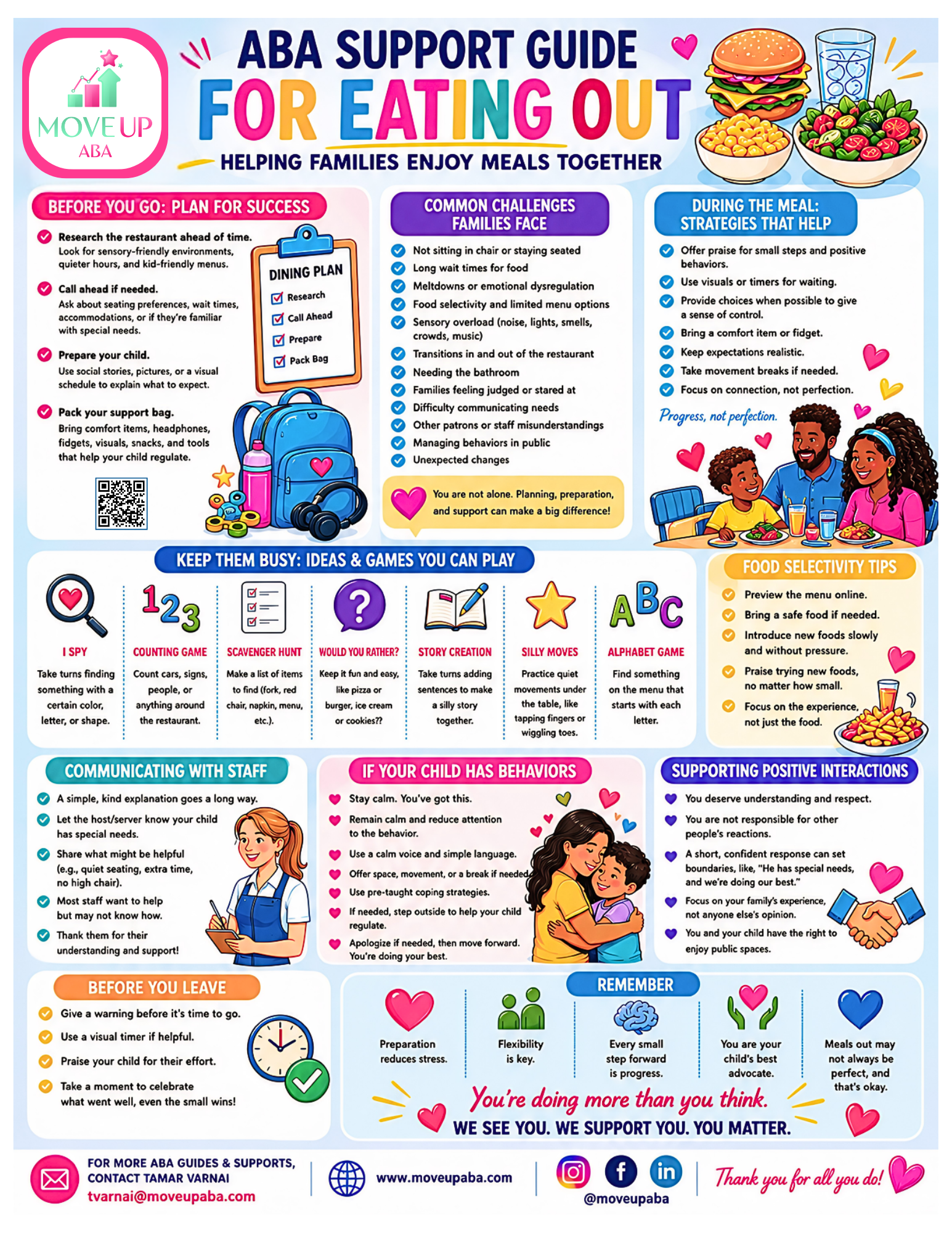
Autism-friendly eating out tips with ABA therapy come down to one idea: preparation beats improvisation. The most effective autism-friendly eating out tips combine planning ahead, preparing your child with visuals, packing a support bag, and using simple ABA strategies at the table—like praise, choices, and short breaks. Together, they turn a stressful outing into a meal the whole family can enjoy.
Eating out is genuinely harder for many autistic children, and that is not a discipline issue. Children with autism are about five times more likely to have feeding difficulties than their peers, according to a 2013 meta-analysis by Sharp and colleagues. Restaurants also pile on noise, lights, smells, waiting, and change. The tips below meet those challenges head-on.
Why Eating Out Can Be Tough for Autistic Kids
Restaurants stack several challenges at once:
- Sensory overload—noise, lights, smells, crowds, and music.
- Long wait times for food, which are hard when waiting is already difficult.
- Food selectivity and limited menu options.
- Transitions in and out of the building.
- Meltdowns or dysregulation when demands outpace coping skills.
- Communication hurdles and unexpected changes.
None of this means eating out is off the table. It means a plan helps. Sensory sensitivity is a core feature of autism, recognized in the DSM-5-TR, so a loud, bright, crowded dining room can genuinely overwhelm a child’s nervous system. You are not alone—preparation, practice, and support make a real difference.
Before You Go: Plan for Success
Preparation reduces stress. Start here:
- Research the restaurant. Look for sensory-friendly spaces, quieter hours, and kid-friendly menus.
- Call ahead. Ask about seating, wait times, and whether staff are familiar with special needs.
- Prepare your child. Use a social story, pictures, or a visual schedule to explain what to expect. Social stories and visual supports are established, evidence-based autism strategies.
- Pack a support bag. Bring comfort items, headphones, fidgets, visuals, and snacks—tools that help your child regulate.
During the Meal: ABA Strategies That Help
This is where ABA therapy earns its keep—small, consistent moves that support success:
- Praise small steps and positive behaviors right away.
- Use visuals or a timer to make waiting concrete.
- Offer choices to give your child a sense of control.
- Bring a comfort item or fidget to hold.
- Take movement breaks if your child needs to reset.
- Keep expectations realistic and focus on connection, not perfection.
Progress, not perfection, is the goal—and science backs the approach. Praise and reinforcement are core ABA tools for building new skills over time.
Food Selectivity Tips for Eating Out
Food selectivity is common in autism and largely sensory—texture, taste, smell, and even color drive many refusals, not stubbornness (Baraskewich et al., 2021). One 2025 review estimated it affects roughly 63% of autistic people, and food texture is the single most common reason a child turns a dish down. That reframes the whole meal: this is sensory, not defiance. Work with it, not against it:
- Preview the menu online before you go.
- Bring safe food if needed.
- Introduce new foods slowly and without pressure.
- Praise any attempt to try something new, no matter how small.
- Focus on the experience, not just what ends up eaten.
Pressure tends to backfire. Low-pressure exposure, repeated over time, is the gentler path.
Keep Them Busy: Easy Table Games
Waiting is easier when hands and minds are busy. Try quiet games:
- I Spy—find something with a certain color, letter, or shape.
- Counting game—count cars, signs, or people around the restaurant.
- Scavenger hunt—spot a fork, a red chair, a napkin, or the menu.
- Would You Rather—keep it light (pizza or burgers? ice cream or cookies?).
- Story creation, silly quiet movements, or an alphabet game using the menu.
Talking to Staff and Staying Calm
A simple, kind explanation goes a long way. Let the host or server know your child has special needs, and share what helps—quiet seating, extra time, or no high chair. Most staff want to help but may not know how, so thank them for their support.
If your child has a hard moment:
- Stay calm and reduce attention to the behavior.
- Use a calm voice and simple language.
- Offer space, movement, or a break.
- Use pre-taught coping strategies, and step outside to help your child regulate if needed.
You are not responsible for other people’s reactions. A short, confident line—”He has special needs, and we’re doing our best”—sets a boundary and moves you forward.
Before You Leave: End on a Win
Wrap up with the same structure you started with:
- Give a warning before it is time to go.
- Use a visual timer if it helps.
- Praise your child’s effort.
- Celebrate what went well, even the small wins.
The Bottom Line on Autism-Friendly Eating Out
Autism-friendly eating out tips with ABA therapy work because they layer preparation, structure, and support. Flexibility is key, and every small step forward is progress. Meals out may not always be perfect—and that is okay. With the right support in place, families can eat out together and actually enjoy it.
Take These Autism-Friendly Eating Out Tips With You
Want the full guide in your pocket for your next outing?
- 📄 Download the free Eating Out Support guide—a one-page ABA cheat sheet to print, pin to the fridge, or share with sitters and family.
- 🔗 Explore more free autism resources from Move Up ABA.
These skills are easier to build with a team behind you. Move Up ABA‘s BCBAs weave eating out, food flexibility, and coping strategies right into your child’s ABA therapy plan. We provide in-home ABA therapy across Maryland and Virginia—including Annapolis, Bethesda, and Bowie. Contact our intake team to get started—no waitlist.