A waiting room with fluorescent lights. A stranger in a mask asking your child to open their mouth. The high-pitched whine of a dental polisher. Unfamiliar smells, unpredictable touch, sudden bright lights pointed at the face.
For most kids, a doctor or dentist visit is mildly unpleasant. For many children with autism, it can be genuinely overwhelming — and the consequences of skipped appointments compound over time. Research published in Pediatric Research and reported by Autism Speaks shows that children with autism have nearly four times the odds of unmet healthcare needs compared to children without disabilities. That gap isn’t because autistic children need less care; it’s often because the visit experience itself becomes a barrier.
Here’s the good news: preparation makes an enormous difference. The same applied behavior analysis (ABA) strategies your family may already be using at home for routines, transitions, and sensory regulation are exactly what works for medical and dental appointments. If your child is already in in-home ABA therapy in Maryland or Virginia, your BCBA can build a preparation plan into the program. If not, the strategies below give you a starting point you can implement at home.
To prepare an autistic child for a doctor’s or dentist’s visit, use a coordinated approach that combines five evidence-based ABA strategies: (1) a social story that explains what will happen step by step, (2) a visual schedule the child can follow during the appointment, (3) gradual desensitization to the sensory elements of the visit, (4) role-play and video modeling so the child practices the experience in advance, and (5) positive reinforcement before, during, and after. Pair this with practical accommodations — a sensory-friendly clinic, a first appointment of the day, and clear pre-visit communication with the medical team. Research from a 2024 PMC systematic review confirms that combining behavioral interventions with sensory adaptations significantly improves cooperation during dental visits for autistic children, and video modeling alone has been shown to reduce the number of visits needed to complete dental procedures.
Why Medical and Dental Visits Are Especially Hard for Autistic Children
Understanding what makes these visits difficult is the first step in preparing well. Most challenges fall into four overlapping categories:
1. Sensory overload. Medical and dental environments are sensory minefields — bright lights overhead, the whine of dental equipment, antiseptic smells, the texture of latex gloves, the taste of fluoride, the cold metal of instruments. Research published in Cureus (2024) documented physiological stress responses in autistic children during dental procedures using electrodermal activity measurements — confirming that the sensory load of these environments produces measurable biological stress, not just behavioral complaints.
2. Unpredictability. Autism research consistently shows that predictable routines reduce anxiety while unpredictable events escalate it. A doctor’s visit involves multiple unknowns — how long the wait will be, what the doctor will do, when it will end, and whether something painful will happen.
3. Communication demands. Doctors and dentists ask questions that require complex verbal responses (“Does this hurt?” “Can you feel this?”). For children with communication differences or who use AAC, the cognitive demand of those questions during a stressful experience can be overwhelming.
4. Touch and physical proximity. Medical exams require touch — sometimes intimate, often unexpected. For children with tactile sensitivities, even routine procedures like temperature checks, blood pressure cuffs, or dental polishing can feel intolerable.
When these four pressures stack, distress responses follow. For some autistic children, these responses include shutdown, elopement, or escalating behavior. For others — particularly children with higher support needs — distress can manifest as self-injurious behavior including head-banging. Head-banging in autism is most commonly documented as a stress response, communication attempt, or sensory regulation behavior, and it can intensify dramatically in overwhelming clinical environments. Recognizing the early warning signs and adjusting the environment before escalation is a core part of effective preparation.
The 5 Evidence-Based ABA Strategies for Medical Visit Preparation
The strategies below are drawn from peer-reviewed research, including a 2024 systematic review of dental interventions for autistic children published in PMC and ongoing clinical trials documented at ClinicalTrials.gov.
1. Social Stories: Explaining What Will Happen Before It Happens
A social story is a short, individualized narrative that explains a situation in simple language using first-person perspective. For medical visits, a social story might read:
“When I go to the dentist, I sit in a special chair that can go up and down. The dentist counts my teeth. I open my mouth wide for a little while. Sometimes the dentist uses a tool that buzzes. The buzzing might feel funny but it doesn’t hurt. After, I get to choose a sticker.”
Research published in World Journal of Gastrointestinal Pharmacology (2025) and ongoing clinical trials at Holland Bloorview confirm that social stories used in the week before a healthcare visit improve cooperation and reduce visit-day distress. The trial protocol at ClinicalTrials.gov (NCT05196230) recommends daily reading for the seven days leading up to the appointment.
How to do it:
- Use real photos of the actual clinic when possible
- Keep sentences short and concrete
- Read it once daily for the week before the visit
- Re-read it in the car before the appointment
- Include what will happen and what the child will do (active framing)
2. Visual Schedules: Giving the Child a Map of the Visit
Visual schedules turn an abstract experience into a concrete, finite sequence the child can see and check off. A simple visit schedule might include: arrive → wait → walk to room → sit in chair → mouth open → counting teeth → toothbrush → polish → all done → reward.
Visual schedules work for medical appointments because they answer the most distressing question for many autistic children: “When will this be over?” Each checked-off step is visible evidence that the experience is moving forward and has a defined end.
How to do it:
- Build the schedule with the medical team in advance so the steps match reality
- Use Velcro or removable icons the child can pull off as each step completes
- Include the reward step at the end so it’s visible throughout
3. Gradual Desensitization: Practicing the Sensory Pieces in Advance
Desensitization means systematically exposing your child to the sensory elements of a clinical visit in low-stress, controlled doses — building tolerance before the actual appointment.
A 2024 systematic review published in PMC (Bayar et al.) found that combining desensitization with reinforcement significantly improved cooperation during dental examinations of autistic patients. The University of Utah School of Dentistry has developed sensory-adapted dental environments specifically for this approach.
How to do it for dental visits:
- Practice opening the mouth wide for short periods (5 seconds, then 10, then 15) — reward each attempt
- Use a regular toothbrush, then introduce an electric toothbrush
- Touch teeth with a small mirror or spoon to simulate dental tools
- Practice lying back with a bright light overhead
- Visit the clinic for non-treatment “hello” visits before the real appointment
How to do it for doctor visits:
- Practice holding still for “counting to 10”
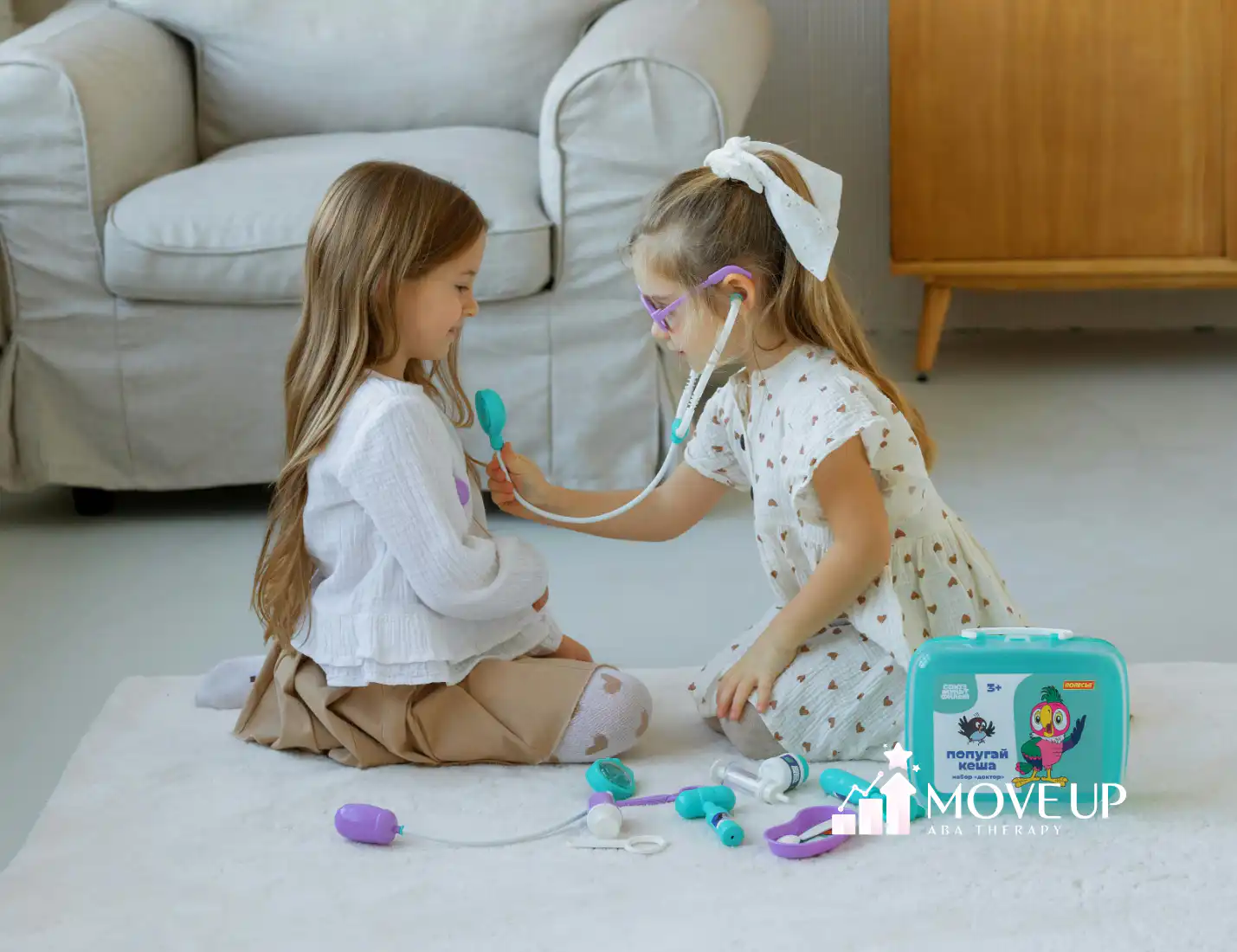
- Use a play stethoscope, blood pressure cuff, or otoscope at home
- Touch arms with a cold object (to simulate stethoscope or alcohol wipe)
- Practice opening the mouth and saying “ahhh”
- Visit the office lobby once or twice without an appointment
4. Video Modeling: Showing the Visit Before Living It
Video modeling — showing your child a video of another child going through the same procedure — has strong evidence in autism research. A 2024 study published in the PMC systematic review found that children who watched a video before dental consultations required fewer visits to complete the same procedures (1.5 visits vs. 2 visits, p ≤ 0.05) compared to controls.
How to do it:
- Search for “social story video [procedure name] children with autism” on YouTube
- Many pediatric dental and medical offices have created videos of their own clinic — ask if yours has one
- A 360° virtual dental office experience is being studied at Holland Bloorview Kids Rehabilitation Hospital (ClinicalTrials.gov NCT05196230)
- Watch the video once a day for the week before the appointment
5. Positive Reinforcement: Building Motivation and Cooperation
Reinforcement is the core mechanism of ABA. For medical and dental visits, reinforcement is layered:
- Before the visit: Earn rewards for completing preparation steps (reading the social story, watching the video, practicing mouth-open).
- During the visit: Token system or visual reinforcer for completing each step on the schedule.
- After the visit: A larger, pre-promised reward that’s clearly contingent on the visit being completed.
A 2025 review in the World Journal of Pediatrics confirmed that integrating behavioral therapy with structured visual and sensory supports significantly improves compliance during dental visits.
How to do it:
- Identify a reward your child genuinely wants (not what you think they should want)
- Make the reward immediate when possible
- Be consistent — the reward should always follow successful completion, never be withheld arbitrarily
Working With the Clinic: What to Ask Before the Appointment
Preparation isn’t only about what happens at home. The medical or dental team can dramatically reduce distress with simple accommodations — if you ask in advance.
Call ahead and request:
- First appointment of the day — empty waiting room, calmer staff, no running behind
- A pre-visit walk-through — many clinics will let you visit the room when nothing is happening
- Dimmer lighting if available — some sensory-friendly clinics have adjustable lighting
- Noise reduction — ask whether equipment can be paused or whether your child can wear noise-canceling headphones
- A specific clinician — building a relationship with one provider reduces unpredictability across visits
- Extended appointment time — many providers will book a double slot for autistic patients, which reduces the time pressure that escalates everyone’s stress
- Clear, concrete language — ask the provider to say “the chair will go back” instead of “I’m going to recline you”
- Communication of your child’s specific signals — share what distress looks like for your child before it escalates to a full meltdown or head-banging
A 2024 University of Utah dental program demonstrated that combining environmental modifications (dim lighting, noise reduction, weighted lap pads) with behavioral preparation produced measurable physiological stress reductions in autistic patients (Cureus, 2024).
The 7-Day Pre-Visit Preparation Schedule
Based on the most successful intervention protocols, here is what a structured 7-day preparation schedule looks like:
Day 7 (one week before): Read the social story. Watch the video model. Start daily desensitization practice (mouth-open, lying back, etc.).
Day 5–6: Continue social story and video. Add a visit to the clinic lobby with no appointment. Take photos for a personalized visual schedule.
Day 3–4: Read social story twice daily. Practice the full sequence using props (toothbrush, mirror, play stethoscope). Build the visual schedule.
Day 1–2: Continue all activities. Confirm accommodations with the clinic. Pack a sensory kit (headphones, weighted lap pad, fidget, preferred snack, reward item).
Day of visit: Read social story in the car. Show visual schedule. Arrive 5 minutes early to settle. Stay calm — children take cues from caregiver affect. Reinforce every step.
A Real-World Example: Maryland Family’s First Successful Dental Visit
A family in Baltimore reached out to a Maryland-based ABA provider after their 6-year-old son had a meltdown at his previous dental cleaning that ended with the appointment being cancelled and rescheduled three times.
The BCBA built a preparation plan into the in-home therapy program:
- Week 1: Introduced the social story using photos taken at the new dental clinic during a non-appointment visit. RBT practiced “mouth-open for 10 seconds” desensitization during regular sessions with reinforcement.
- Week 2: Added a play dentist set during therapy. RBT modeled “the dentist counts teeth” with a finger puppet. Family practiced lying back on the couch with a flashlight overhead.
- Week 3: Watched a video of a child going through a full cleaning. Built a Velcro visual schedule with the actual steps from the clinic.
- Day of visit: First appointment of the day. Family arrived 5 minutes early. RBT was present in the waiting room (not in the operatory). Child wore noise-canceling headphones during the polish. Reward at end: a small Lego set chosen in advance.
The cleaning was completed in 22 minutes — slightly longer than a typical appointment, but the family reported no escalation, no head-banging, and the child willingly returned six months later for the follow-up.
This is a representative example of the protocol — not a guarantee of identical results. Outcomes depend on the individual child, the clinic, the procedure, and the consistency of preparation.
When Visits Still Don’t Go Well: Escalation, Self-Injury, and Next Steps
Even with strong preparation, some visits will still escalate. For some autistic children — particularly those with higher support needs — severe distress during medical procedures can manifest as self-injurious behavior including head-banging.
Head-banging in autism is a well-documented behavior with multiple potential functions, including communication of distress, sensory regulation, and escape from overwhelming environments. During a medical or dental visit, head-banging is often a communication signal: the child has reached a threshold and the current demand needs to stop or be modified.
If a visit escalates:
- Pause immediately. Do not attempt to push through. Pushing through teaches the child that distress signals are ignored, which makes future visits worse.
- Move to a quiet space if possible.
- Allow the child to self-regulate using familiar strategies.
- Discuss with the medical team whether to reschedule, complete a partial visit, or change the approach.
If self-injurious behavior is a recurring concern: Working with a BCBA to develop a functional behavior assessment (FBA) specifically around medical visits can identify the precise triggers and antecedents that escalate to self-injury. The FBA informs a behavior support plan tailored to your child’s specific patterns.
How ABA Therapy Supports Long-Term Medical Visit Success
Single-visit preparation works for individual appointments. But for children who will have many medical and dental visits throughout childhood, building long-term tolerance is more sustainable than preparing for each visit from scratch.
ABA therapy programs in Maryland and Virginia can build medical visit skills systematically — generalizing desensitization practice, expanding tolerance for clinical environments, and developing communication systems your child can use to request breaks or signal distress without escalating to self-injury. Move Up ABA’s in-home programs can integrate medical visit preparation as a goal within the broader therapy program, with the BCBA coordinating directly with your child’s medical providers when appropriate.
Conclusion: Preparation Is the Difference Between a Skipped Appointment and a Successful One
Doctor and dentist visits don’t have to be the family stress event they often become. With evidence-based ABA strategies — social stories, visual schedules, gradual desensitization, video modeling, and reinforcement — combined with practical clinic accommodations and clear communication with the medical team, families can shift visits from crisis events to manageable routines.
The four-times-higher rate of unmet healthcare needs for autistic children isn’t a fixed reality. It’s a gap that preparation, ABA support, and family-clinic partnership can close.
Want the whole plan on one page you can pin to the fridge or hand to a sitter?
- 🩺 Download the free Doctor Visit Tips sheet, a one-page ABA cheat sheet covering social stories, desensitization, and reinforcement for medical appointments.
- 🦷 Download the free Dental Visit Tips sheet, a printable companion with the same strategies tailored to the dentist’s chair.
- 🔗 Explore more free autism resources from Move Up ABA.
If you’re in Maryland or Virginia and want help building a medical visit preparation plan that fits your child’s individual needs, book an evaluation with Move Up ABA — our BCBAs can integrate preparation directly into your in-home program, and most families get started within 2–4 weeks.
Contact us today | Call: 410-497-8865
FREQUENTLY ASKED QUESTIONS
Q: How early should I start preparing my autistic child for a doctor or dentist visit?
A: Start at least one week before the appointment for routine visits, and 2–3 weeks before for more complex procedures (extractions, blood draws, vaccinations). Research-backed protocols use a 7-day daily social story and video modeling schedule. For children with significant anxiety around medical settings, longer preparation periods with gradual desensitization built into ABA sessions are more effective.
Q: What is a social story and how do I make one for a doctor’s visit?
A: A social story is a short, individualized narrative that explains a situation step-by-step using simple, concrete language and first-person perspective. To make one for a doctor’s visit, take photos of the actual clinic during a pre-visit walk-through, write 5–10 short sentences describing what will happen and what your child will do, include sensory details (sounds, smells, tools), and end with what comes after (a reward or going home). Read it daily for the week before the appointment.
Q: Can ABA therapy help my child with medical and dental visits?
A: Yes. ABA therapy uses several techniques that directly transfer to medical visit preparation — social stories, visual schedules, gradual desensitization, video modeling, and reinforcement. A BCBA can integrate medical visit goals into a broader ABA program, allowing your child to build tolerance through structured practice with their RBT before facing the actual appointment. This is especially valuable for children who have repeatedly difficult visits or who have shown self-injurious behavior like head-banging during clinical environments.
Sources:
https://pmc.ncbi.nlm.nih.gov/articles/PMC10779209/
https://pmc.ncbi.nlm.nih.gov/articles/PMC6102426/
https://moveupaba.com/blog/visual-learning-strategies-for-autism/
https://www.appliedbehavioranalysisedu.org/what-is-reinforcement-and-why-is-it-important-in-aba/